If you want to grow larger, stronger legs without the spinal stress of barbell back squats, belt squats and leg presses are two of the most popular choices in gyms. Both deliver heavy lower-body loading, but they work your legs in very different ways, and picking the right one can speed up your hypertrophy and strength progress. Understanding their unique mechanics, muscle activation and limitations helps you decide which deserves a primary spot in your leg day routine.

The belt squat replicates the natural squat pattern, with weight hanging from a hip belt rather than resting on your upper back. This removes spinal compression entirely, letting you hit deep squat positions safely. It engages quads, glutes, hamstrings, adductors and smaller stabilizer muscles around the hips and ankles. Because you control your balance and movement path, it builds functional lower-body strength that transfers well to sports, lifting and daily movement. The deep bottom stretch creates strong mechanical tension across the posterior chain, which is excellent for glute and hamstring growth. It is ideal for lifters with back pain, those recovering from injury, or anyone who wants squat-style leg work without loading the spine. The downside is that balance and hip mobility can cap how much weight you can use, slowing total volume for some people.
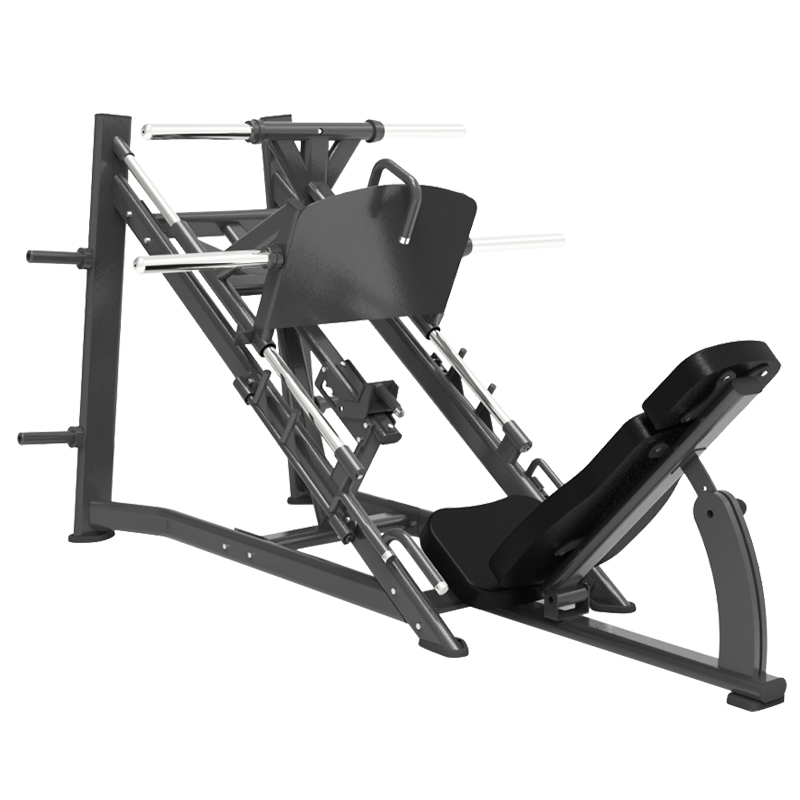
The leg press is a fixed-path machine where you push a weighted platform with your feet while seated. It is far easier to pile on heavy weight and knock out high-rep sets, since the seat supports your torso and removes balance demands. For pure quadriceps hypertrophy, the leg press often has a slight edge. You can tweak foot placement to shift tension: high feet hit glutes and hamstrings, low feet focus squarely on quads. Most lifters can accumulate more total training volume with less fatigue to the core and stabilizers. That said, the guided movement limits stabilizer activation. Poor form, such as rounding your lower back or cutting the range of motion short, raises injury risk and wastes muscle-building potential. It is less functional, as it does not train the coordination needed for free squat patterns.
So which builds bigger, stronger legs faster? There is no universal winner. If your top goal is quad size and high-volume muscle growth with minimal technical demand, the leg press is hard to beat. You can add more load and reps quickly, which drives hypertrophy efficiently. If you want full lower-body development, better glute and hamstring activation, functional strength, or need to protect your back, the belt squat is the superior option. It gives you the squat movement pattern while keeping your spine safe, and it builds a more complete, resilient lower body.
For most lifters, the best strategy is not choosing one over the other. Use belt squats as your main compound lift to build functional leg strength and full posterior chain muscle, and add leg press as an accessory to pile extra quad volume. This combination maximizes muscle growth while lowering injury risk. Whether you train in a commercial gym or home gym, matching your exercise choice to your injury history, mobility limits and goals is the fastest way to build bigger, stronger legs over time.