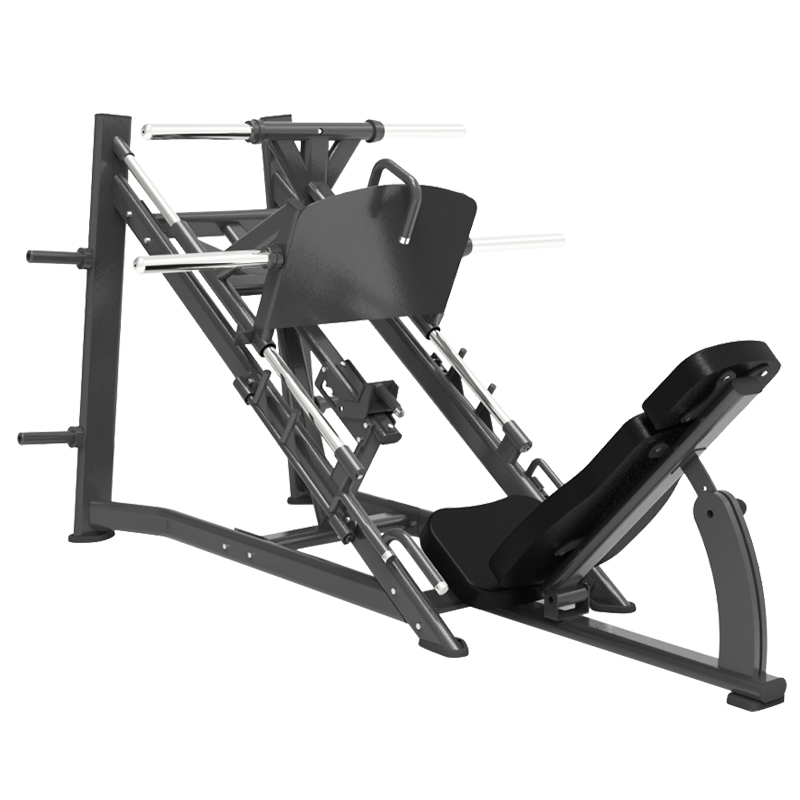
If you want bigger, fuller quads, the leg press is one of the most reliable tools in your gym routine. Unlike back squats, which demand strong core stability, good mobility and technical mastery, the leg press lets you load heavy weight safely while tuning foot placement, depth and tempo to zero in on your quadriceps. Many lifters use the leg press only as a secondary movement, but with the right variations, it can become your primary builder for thick, defined quads.

The biggest mistake most people make on the leg press is using a single foot position for every set. Where you place your feet on the press plate changes the tension distribution dramatically. To prioritize quad growth, start with the classic low-foot leg press. Set your feet shoulder-width apart, lower on the plate, near the bottom edge. This position shortens the lever for your glutes and hamstrings and forces the quadriceps to carry nearly all the load. Keep your toes slightly turned out at 15 to 30 degrees, a natural alignment that protects your knee joints while keeping constant tension on the vastus lateralis, vastus medialis and rectus femoris. Control the eccentric phase slowly, avoid locking out your knees at the top, and do not bounce the weight at the bottom of the movement. Locking out removes tension from your quads and puts dangerous shear stress across your knee joints.
Next, try the narrow-stance low leg press variation. Bring your feet closer together, still positioned low on the plate. This shifts extra stress to the outer quad head, the vastus lateralis, which creates that desirable “teardrop” and outer sweep on the thighs. This variation feels different immediately; many lifters find they need to drop their working weight slightly compared to the standard low-foot setup. Pause for one second at the bottom of each rep to eliminate momentum and stretch the quads under load. Paused reps are a proven way to boost mechanical tension, one of the three key drivers of muscle hypertrophy.
For targeting the vastus medialis, the teardrop muscle below your knee, use a slightly wider low stance with more outward toe flare. A wider foot position opens up the hip and increases stretch on the inner quad. This variation is excellent for lifters who struggle to develop the lower portion of their quads, an area that often looks underdeveloped even when overall leg size is solid. Keep your back pressed firmly against the seat pad the entire time. Lifting your lower back off the support shifts load to your hips and glutes and raises injury risk for your lumbar spine.
Single-leg leg press is another powerful variation for quad gains. Working one leg at a time fixes strength imbalances and forces each quad to handle the full workload without compensation from your stronger side. It also improves mind-muscle connection, helping you feel the contraction deep in your thigh instead of just pushing weight. Use lighter weight than your two-leg sets, focus on smooth movement, and resist twisting your hips as you press.
Rep scheme matters for maximum quad growth, too. For hypertrophy, 3 to 4 sets of 8–12 reps works well, but mixing in higher-rep sets of 15–20 can add metabolic stress that fuels extra growth. You can also add drop sets at the end of a heavy block: after hitting failure, quickly unload some weight and keep pressing for another 6–10 reps.
No variation will work if your recovery is lacking. Quads are a large muscle group, and they need protein, enough calories and rest between hard leg sessions. Give your quads at least 48 hours of recovery before training them again. The leg press is versatile, but progressive overload is non-negotiable. Over weeks, aim to add a little weight, an extra rep, or slow down your tempo to keep challenging your quads.
When programmed properly, these leg press variations eliminate guesswork. You do not need to chase extreme squat PRs to build impressive quad development. Master foot placement, control your form, rotate these variations, and apply steady progressive overload, and you will see noticeable quad growth over time.