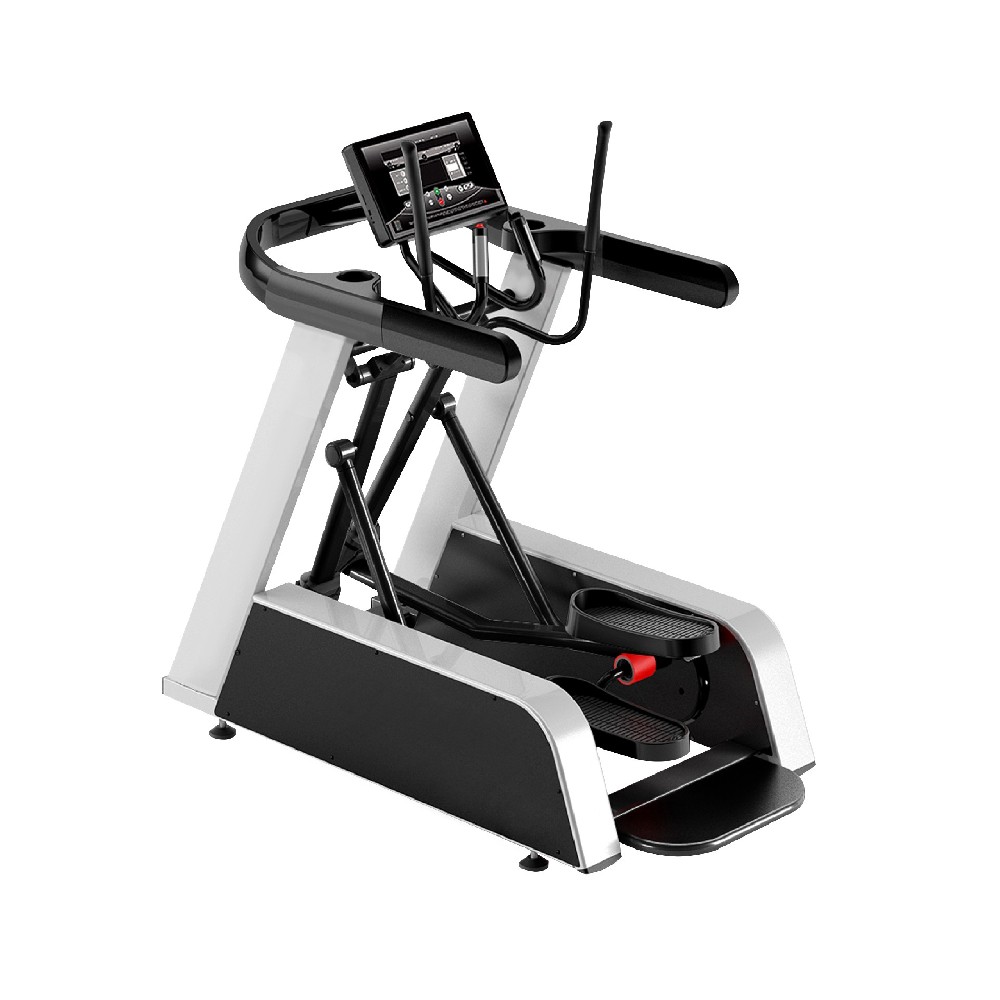
If you ask most gym users what an elliptical trainer targets, they will quickly answer that it only works the legs. This is one of the most widespread misunderstandings about this popular cardio machine. While the lower body is indeed the primary driver of the elliptical movement, proper form and active use of movable handles turn it into a full-body workout that engages far more muscle groups than most people realize. Knowing exactly which muscles are activated will help you design more efficient training sessions and get better fitness results.

The lower body carries the main workload during elliptical training. The quadriceps on the front of your thighs contract strongly as you push the pedals down, especially when you raise the incline or resistance level. Your hamstrings at the back of the thighs work as opposing muscles to control the pedal movement and assist hip extension. The gluteal muscles, including the gluteus maximus and medius, fire noticeably when you pedal backward or increase the ramp angle, which is an effective way to shape and strengthen your hips. Calf muscles, both gastrocnemius and soleus, stay engaged throughout the stride to stabilize ankle movement and support weight transfer.
A huge number of people ignore the movable arm bars, which is why they never feel upper-body fatigue on the elliptical. When you actively push and pull the handles instead of just resting your hands, you activate multiple upper-body muscles. Pushing the handles forward engages your chest and anterior deltoids, while pulling them back targets your latissimus dorsi, rhomboids and rear shoulders. Biceps and triceps also join the movement to control the pushing and pulling rhythm. Without using these handles, you miss out on the full calorie-burning and toning benefits this machine can offer.
Another often-overlooked area is your core. To keep an upright and stable posture on the moving pedals, your transverse abdominis, obliques and lower back stabilizers stay lightly contracted nonstop. Many users slouch or grip the handles tightly to support their weight, which instantly switches off core activation and weakens training efficiency. Keeping your torso upright, shoulders relaxed and core braced will automatically add a stability challenge to every elliptical session.
Beyond muscle activation, the elliptical shines for its low-impact feature. Unlike running, it creates no harsh foot strike force, making it friendly for people with knee, hip or ankle discomfort, seniors and beginners. Still, many trainees make common mistakes: holding the handles too firmly, keeping resistance too low, maintaining a short stride, or hunching forward. All these errors reduce muscle engagement and limit training gains. Simple adjustments like higher resistance, backward pedaling and active arm driving can completely change the training effect.
To sum up, the elliptical is not merely a leg cardio tool. It trains quads, hamstrings, glutes and calves in the lower body, chest, back, shoulders and arms in the upper body, plus deep core stabilizers. Once you abandon the wrong idea that it only works legs and master the correct technique, you can maximize every workout to boost endurance, burn calories and build balanced muscle tone safely.