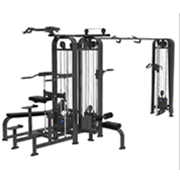
Cable machines stand out as one of the most versatile gym gear for full-body muscle shaping, strength building and joint-friendly isolation training. Unlike free weights that only load muscles at certain movement angles, cables deliver constant tension through every rep—this unique advantage makes them a staple for beginners and advanced lifters alike. Even so, countless gym users fail to unlock their full potential, falling prey to repeated, easily fixable mistakes rooted in tiny, overlooked training details. This guide breaks down the most widespread cable machine errors and delivers actionable adjustments to refine your workout efficiency.

The first and most ignored detail is failing to adjust pulley height to match each exercise’s muscle pull path. Many lifters stick to a single pulley position for all movements out of laziness, ruining targeted muscle stimulation. For cable chest flyes, set pulleys high to stretch chest fibers fully; tricep pushdowns require the highest pulley mount, while cable face pulls work best at eye level. A misaligned pulley shifts tension away from your target muscle onto shoulders, elbows or lower back, turning precision isolation into ineffective, joint-straining movement. Always take 10 seconds to reposition the pulley before switching exercises—this small tweak drastically improves muscle contraction.
Overloading weight and relying on body momentum ranks as the second pervasive cable machine fault. It is tempting to stack heavy weight plates to chase visible progress, yet excessive load forces your torso to swing, jerk or lean drastically to finish reps. Cable training’s core value lies in controlled, slow muscle tension, not brute force. Swinging creates slack in cables, cuts time under tension and transfers stress to spinal joints. The simple fix: drop weight until you can complete every rep with a rigid, braced core and zero torso sway. Prioritize 2–3 second slow eccentric lowering phases; longer negative movement triggers more muscle growth than rushed, heavy sets.
Most trainees also overlook proper standing distance from the weight stack. Standing too close lets weights rest between reps, eliminating continuous tension; standing too far pulls your body off balance and overstrains stabilizer muscles. The ideal stance leaves cables slightly taut at your starting position without pulling your posture forward or backward. Pair this with consistent core bracing—another forgotten detail. Many people relax their midsection mid-set, causing rounded spines and shoulder protraction during rows, presses and pulls. Brace your abs as if preparing for a light punch to maintain neutral spine alignment through the entire set.
Incorrect attachments and loose grip technique further limit cable workout results. D-handles, straight bars and rope grips each serve distinct muscle groups, yet many lifters grab whatever attachment is available without thought. Rope attachments maximize tricep stretch at the bottom of pushdowns, while single D-handles enable unilateral chest and shoulder work to fix muscle imbalances. Avoid white-knuckle gripping the hardware too tightly; tense forearms steal focus from target muscles. Hold attachments firmly but relaxed, letting arms act as simple connectors rather than primary pulling drivers.
Minor breathing rhythm errors also go unnoticed by most gym users. Holding breath through pulling or pushing spikes blood pressure and weakens core stability. Follow this rule: exhale forcefully during the muscle contraction (pulling/pushing phase), and inhale steadily as you slowly return to the starting point. Consistent breathing stabilizes your frame and lets you sustain clean form across all working sets.
Final Takeaways
You do not need complicated training upgrades to maximize cable machine gains. Fixing these commonly overlooked small details—pulley height adjustment, weight selection, stance distance, core bracing, attachment choice and controlled breathing—eliminates wasted effort and lowers injury risks. Next time you step up to the cable station, pause to audit these form fundamentals before starting your sets. These subtle optimizations turn average cable workouts into high-efficiency sessions that deliver faster, more defined muscle growth.