When planning home cardio workouts, most fitness enthusiasts struggle to choose between elliptical machines and treadmills. Both are mainstream aerobic exercise devices widely used in gyms and family fitness rooms, yet they differ greatly in exercise effects, crowd adaptability, space occupation and body burden. This detailed guide analyzes their respective advantages and disadvantages, helping you pick the most suitable cardio machine according to your fitness goals and physical conditions.

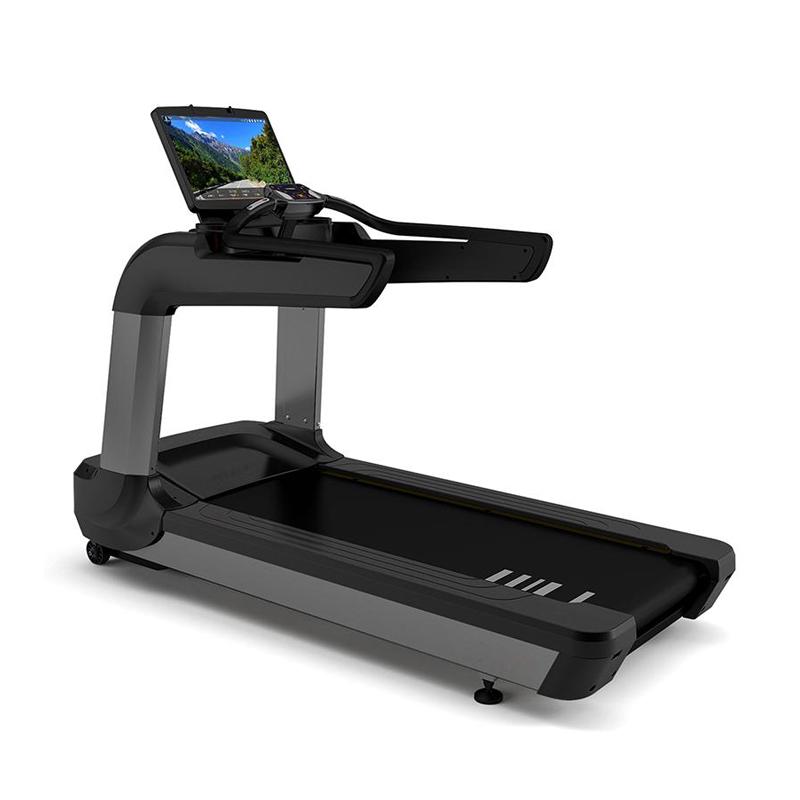
Treadmills have always been the most popular classic cardio fitness equipment. Its biggest advantage lies in highly restoring real running and walking postures. Simulating outdoor running allows users to fully mobilize leg muscles, core strength and arm coordination, which can quickly raise the heart rate and achieve efficient fat burning effects in a short time. For fitness lovers who want to improve physical endurance, enhance physical fitness and pursue fast weight loss, treadmills are undoubtedly the preferred choice.
In addition, most modern treadmills are equipped with adjustable speed and slope functions. Users can freely switch between slow walking, brisk walking, jogging and high-intensity interval running to enrich workout modes and avoid exercise monotony. Long-term adherence to treadmill running can effectively improve cardiopulmonary function, accelerate body metabolism and relieve daily work fatigue.
However, treadmills also have obvious shortcomings. Running will produce strong impact force, which is transmitted to knees, ankles and waist joints through the legs. People with weak joint foundation, middle-aged and elderly people, overweight groups and users with knee injuries are prone to joint soreness and discomfort after long-term use. Meanwhile, standard treadmills occupy a relatively large indoor space, generate loud running noise during use, and may easily affect family rest and neighborhood quietness.
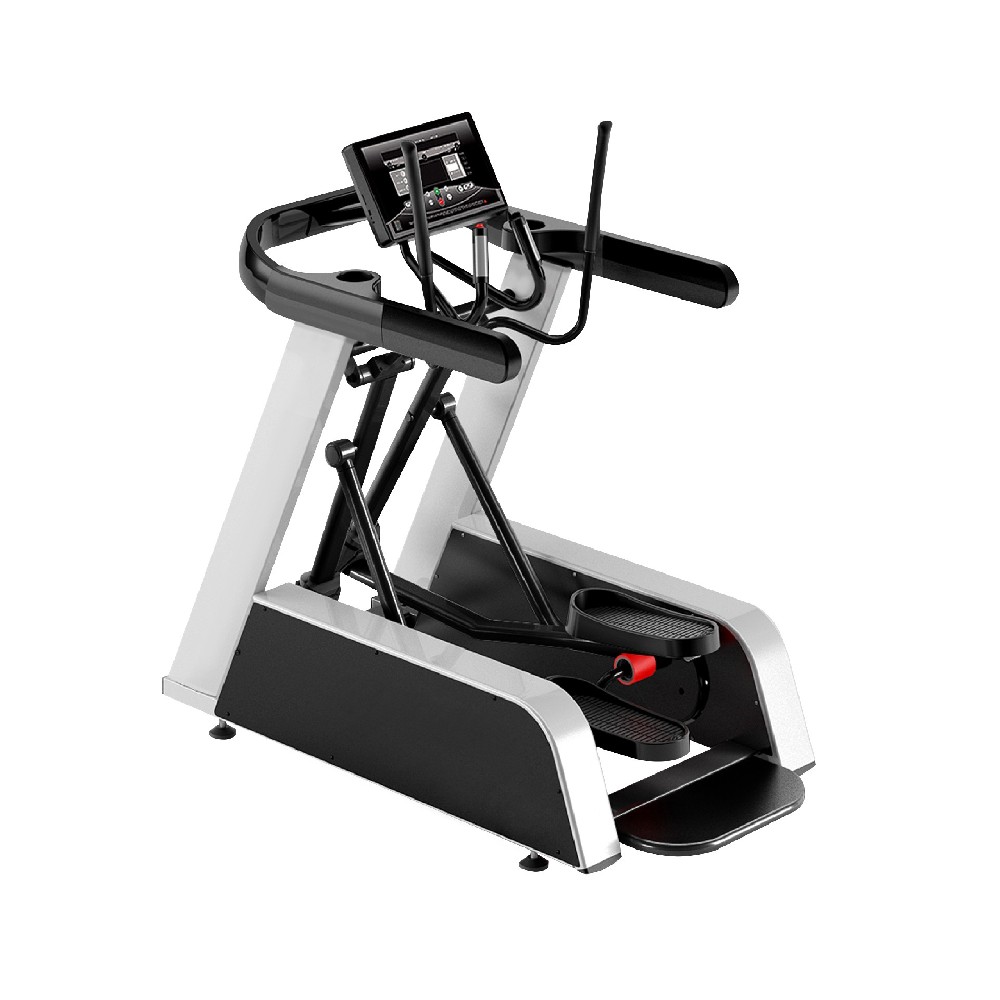
Different from treadmills, elliptical machines adopt low-impact circular motion design, which is the core advantage winning wide public favor. During the whole exercise process, the user’s feet are always closely attached to the pedals without jumping and striding movements, which greatly reduces the pressure on knee joints and ankle joints. It is very friendly to joint-sensitive people, postpartum women, beginners and middle-aged and elderly fitness users.
Elliptical machines can drive the movement of upper limbs and lower limbs synchronously. By holding the movable armrests, users can exercise arms, shoulders, back and buttock muscles while moving legs, realizing full-body coordinated shaping. Its movement rhythm is gentle, the exercise intensity is easy to control, and it is not easy to feel physical fatigue suddenly. It is suitable for daily long-term aerobic fat loss, body relaxation and post-workout recovery training.
In terms of defects, the exercise intensity of elliptical machines is lower than that of treadmills. It takes longer exercise time to reach the same calorie consumption effect, so it is not suitable for fitness people who pursue high-intensity explosive training and rapid fat loss. Moreover, its fixed track movement is single, lacking real running sense, and cannot effectively exercise the bouncing ability of the body.
To sum up, you can make a clear choice based on actual demands. If you pursue high-efficiency fat burning, love running sports, have healthy joints and sufficient home space, a treadmill is more in line with your needs. If you focus on joint protection, prefer gentle full-body exercise, need quiet home fitness or belong to the overweight and joint vulnerable groups, an elliptical machine is the more practical option.
Reasonably matching fitness equipment and sticking to scientific aerobic training can not only achieve ideal weight loss and shaping effects, but also protect physical health and form a long-term healthy living habit.