Running is one of the most accessible and effective workouts for improving cardiovascular health, building endurance, and burning calories. When it comes to running training, people often struggle to choose between treadmill running and outdoor running. Although both forms of exercise involve continuous running movements, there are obvious core differences in terrain resistance, environmental conditions, physical impact and training effects. Understanding these differences can help runners make a reasonable choice according to their fitness goals.

1. Terrain and Running Resistance
The most fundamental difference lies in terrain resistance. Outdoor running features uneven roads, natural slopes and variable wind resistance. Pavement, grass and gravel roads bring different friction, and natural wind will continuously increase running resistance. These uncontrollable factors force human muscles to make real-time adjustments to maintain balance. In contrast, treadmills provide flat, smooth and consistent surfaces. The rotating belt moves passively, which greatly reduces ground friction and wind resistance. For this reason, outdoor running usually consumes 10% to 15% more calories than treadmill running at the same speed.
2. Physical Impact on Joints
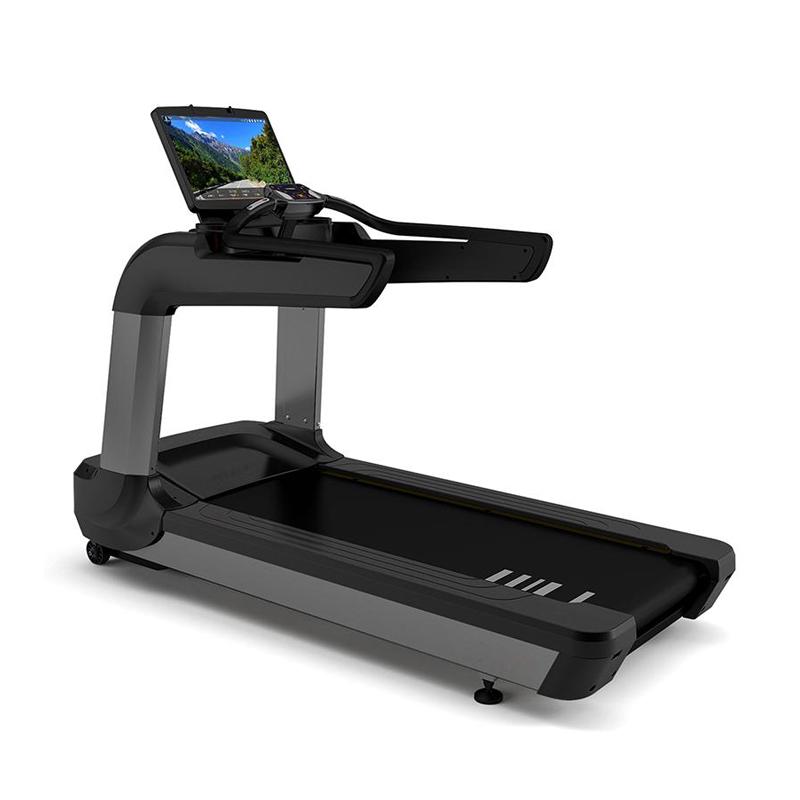
Joint pressure is a key concern for most runners. High-quality treadmill belts are equipped with shock-absorbing cushions, which can effectively buffer the impact on knees, ankles and soles during running. It is friendly for beginners, overweight runners and people with minor joint injuries. Nevertheless, outdoor hard asphalt roads lack cushioning. The rigid ground brings greater vertical impact to human joints. Long-term outdoor running without protective measures may increase the risk of joint strain.
3. Environmental Experience and Mental State
The gap in environmental experience cannot be ignored. Outdoor running allows people to breathe fresh air, enjoy natural scenery and feel temperature changes. The changing outdoor environment avoids monotonous training and effectively relieves mental fatigue and running boredom. However, outdoor running is easily affected by bad weather such as heavy rain, extreme heat and strong wind. Treadmill running is not restricted by weather and traffic conditions. Runners can exercise stably in a constant-temperature indoor space, with safer and more controllable training conditions.
4. Training Stability and Flexibility
Treadmills have accurate data displays of speed, slope and heart rate, enabling runners to arrange quantitative training plans with stable rhythm. It is suitable for fixed-intensity training. Outdoor running is more flexible in movement modes. Variable slopes and uncertain road conditions can better simulate real physical exercise scenes and improve human body adaptability and muscle coordination.
Conclusion
There is no absolute distinction between good and bad for treadmill and outdoor running. Treadmills are more suitable for people who pursue safety, stability and joint protection. Outdoor running is better for those who want higher calorie consumption and immersive sports experience. Combining these two running methods properly can balance physical training and sports fun, bringing a better long-term running effect.