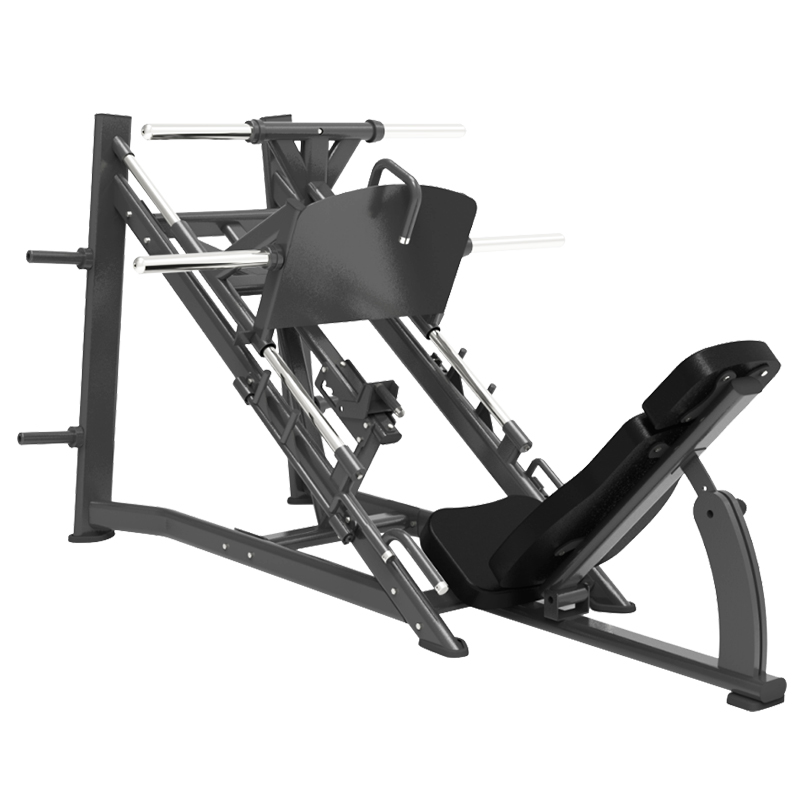
If you want bigger, stronger legs, the 45 degree leg press is one of the most effective machines you can use. It lets you lift heavy weight safely, targets your quads, glutes, and hamstrings, and supports your lower back. However, many gym-goers use poor form, which limits growth and increases injury risk. Below is a step-by-step guide to performing the 45 degree leg press correctly for maximum leg growth.

First, adjust the machine to fit your body. Sit down and place your feet shoulder-width apart in the middle of the platform. Your knees should bend to about 90 degrees when you lower the weight. This position keeps tension on your leg muscles instead of your joints. If your knees go too far forward or your hips lift off the seat, you are setting yourself up for knee or back pain.
Next, unlock the safety bars and fully extend your legs. Do not lock your knees at the top. Keeping a slight bend in your knees maintains constant tension on your quads and hamstrings, which boosts muscle growth over time. Many people make the mistake of locking their knees, which reduces muscle activation and can strain the joint.
Lower the weight slowly and with control. Aim for a 2–3 second eccentric (lowering) phase. Stop when your knees form a 90-degree angle, or when your thighs are parallel to the platform. Do not lower the weight too far. If your hips or lower back begin to round, you have gone too deep. This mistake shifts stress to your lower back and takes focus away from your legs.
Push through your entire foot, not just your toes or heels. Using your whole foot evenly activates your quads, glutes, and hamstrings more effectively. Drive the platform upward until your legs are almost straight, again without locking your knees. Exhale as you push and inhale as you lower. Breathing properly stabilizes your core and supports heavy, safe lifting.
For maximum leg growth, focus on mind-muscle connection. Think about squeezing your quads at the top of each rep and stretching your leg muscles at the bottom. Avoid using momentum to swing the weight. Fast, sloppy reps reduce muscle growth and raise injury risk. Controlled, intentional movements build muscle faster.
Choose a weight that challenges you but allows good form. For hypertrophy, aim for 3–4 sets of 8–12 reps. The last 2–3 reps should feel difficult but still manageable with proper technique. If you cannot complete all reps without rounding your back or lifting your hips, reduce the weight.
The 45 degree leg press also offers several advantages over barbell squats or lunges for some people. It reduces spinal compression, making it a great choice for those with minor back discomfort. It also allows you to focus strictly on your legs without worrying about balance or core stability.
To maximize results, add the 45 degree leg press to your leg day routine. Pair it with squats, lunges, or leg curls for complete leg development. Always warm up before lifting heavy. Spend 5–10 minutes on light cardio, then do 1–2 light sets of leg press to prepare your knees and muscles.
In conclusion, the 45 degree leg press is a powerhouse exercise for leg growth when done correctly. Proper setup, controlled movement, full muscle activation, and appropriate weight are the keys to success. Avoid common mistakes like rounding your back, locking your knees, or using too much weight. Follow this guide, stay consistent, and you will see noticeable improvements in leg size, strength, and symmetry.