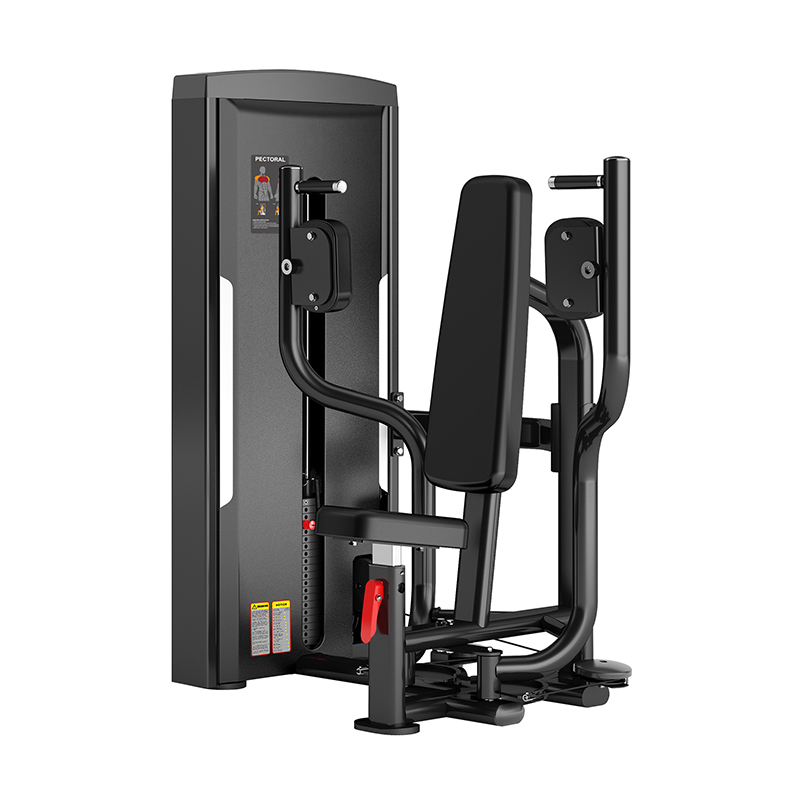
If you want bigger, stronger arms and well‑defined triceps, the triceps press machine is one of the most effective tools in the gym. Unlike free weights, this machine stabilizes your body, reduces injury risk, and lets you focus strictly on contracting your triceps. Whether you’re a beginner or an experienced lifter, mastering proper form is the key to real arm growth and avoiding unnecessary strain. Below is a step-by-step guide to using the triceps press machine safely and effectively.

First, adjust the machine to fit your body. Sit tall with your back pressed firmly against the padded support. Place your chest forward slightly, and make sure your shoulders are relaxed and down—not hunched toward your ears. Adjust the hand grips or lever so your upper arms are parallel to the floor and your elbows are bent at about a 90-degree position. Your feet should be flat on the ground for stability, and your core should stay tight throughout the movement. Proper setup keeps tension on your triceps instead of your shoulders or lower back.
Next, focus on your starting position. Grip the handles firmly with your palms facing downward or inward, depending on the machine design. Keep your upper arms stable and pinned close to your torso. Many lifters make the mistake of moving their elbows outward or swinging their body, which shifts stress away from the triceps. Your elbows should stay fixed in place; only your forearms should move during the exercise.
To perform the movement, exhale as you push the handles or lever downward until your arms are almost fully straight. Do not lock out your elbows completely, as this can put harmful pressure on the joints. At the bottom position, squeeze your triceps hard for one full second. This peak contraction boosts muscle activation and leads to better growth over time.
Inhale as you slowly return to the starting position. Resist the weight and control the movement on the way up—do not let the weight drop quickly. Taking two to three seconds for the eccentric (lowering) phase increases time under tension, which is critical for muscle development. Rushing the exercise reduces results and increases injury risk.
To get the most from the triceps press machine, avoid common mistakes. Do not arch your back, jerk the weight, or use momentum to lift heavier loads. Choose a weight that allows you to maintain strict form for your entire set. Keep your neck neutral and your gaze forward to avoid straining your upper spine.
For best results, perform 3 to 4 sets of 10 to 15 repetitions. This rep range is ideal for building tricep size and strength. You can add this exercise to your arm day, upper-body day, or push-day routine. It pairs well with pushdowns, dips, and overhead tricep extensions for complete arm development.
In conclusion, the triceps press machine is a beginner-friendly, joint-friendly exercise that delivers impressive arm results when done correctly. By following proper form, keeping your upper arms stable, and focusing on controlled movements, you will build stronger, more defined triceps. Take the time to learn the movement, prioritize form over heavy weight, and stay consistent. Before long, you will notice visible improvements in your arm shape, strength, and overall upper-body physique.