Choosing a treadmill often leaves buyers stuck between home and commercial models. Both get you moving, but they’re built for totally different uses—pick the wrong one, and you’ll either waste money on unneeded power or end up with a machine that breaks down fast. To avoid regret, start by understanding these 4 critical differences.

1. Motor Power: The "Heart" of Durability
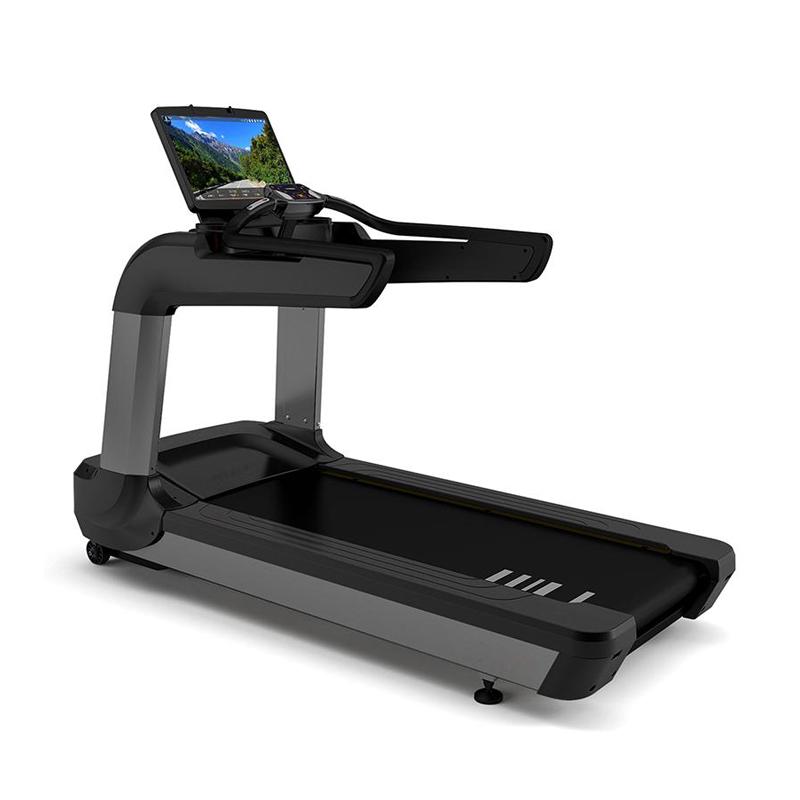
A treadmill’s motor determines how well it handles long, intense use—and this is where home and commercial models split sharply.Commercial treadmills (think gym machines) have continuous horsepower (CHP) ranging from 3.0 to 5.0 or higher. They’re designed for back-to-back use: one person runs a 5K, then another jumps on for a walk, no downtime. This heavy-duty motor won’t overheat even with 8+ hours of daily use.Home treadmills usually max out at 2.0 to 3.0 CHP. They’re made for occasional use—maybe 1-2 hours a day, 3-5 days a week. A home motor works great for casual walks or short runs, but push it with hours of daily high-speed running, and it’ll wear out quickly.
2. Weight Capacity: Safety for All Users
Commercial treadmills are built to support everyone, from 120 lbs to 400 lbs or more. Gyms need machines that handle diverse body types, so their frames use thick steel, and belts are reinforced to avoid stretching or slipping under heavy loads.Home treadmills typically have a weight capacity of 250 to 300 lbs. This fits most individual users, but if multiple family members (especially heavier ones) plan to use it regularly, a home model might feel unstable or wear out faster. Always check the capacity before buying—exceeding it voids warranties and risks injury.
3. Size & Space: Fit for Your Home (or Not)
Commercial treadmills are big—really big. They have longer running decks (60+ inches) for tall users to stride comfortably, and wider belts (20+ inches) for stability. But their bulk is a problem at home: they’re heavy (300+ lbs), hard to move, and take up floor space like a small couch.Home treadmills are designed for tight spaces. Many have foldable frames—you can lift the deck up and store it against a wall when not in use. Their running decks are shorter (50-55 inches) and narrower (18-19 inches), which saves space but might feel cramped for tall or long-strided runners. Measure your workout area first—leave at least 2 feet of space around the treadmill for safety.
4. Price & Longevity: Invest for Your Needs
Commercial treadmills cost more upfront—usually $3,000 to $10,000+. But they’re built to last 7-10 years (or longer with maintenance) because of their heavy-duty parts. Gyms rely on this longevity to get a return on investment.Home treadmills are cheaper, ranging from $800 to $2,500. But their lifespan is shorter—3-5 years with regular use. Cheaper home models might cut corners on parts (like weaker motors or thinner belts), so they’re better for casual users, not serious runners.
Final Tip: Match the Treadmill to Your Use
If you’re a casual user who walks 30 minutes a day, a home treadmill is perfect—it’s affordable and fits your space. But if you run 5+ miles daily, or multiple people in your household will use it, a commercial-grade treadmill (even a smaller "light commercial" model) is worth the investment. It’ll handle the wear and keep you safe for years.
Want me to help you draft a comparison table of top home and commercial treadmill models to go with this article? It’ll make it easier for readers to pick the right one based on their budget and needs.