When it comes to building strong, toned glutes and legs, squats are the gold-standard exercise—but choosing between the hack squat machine and free squat (barbell or bodyweight) can leave even seasoned gym-goers confused. Both have unique benefits, but the "better" option depends on your fitness level, goals, and physical limitations. Let’s break down their pros, cons, and ideal use cases to help you decide.

1. Stability & Safety: A Key Difference for Beginners
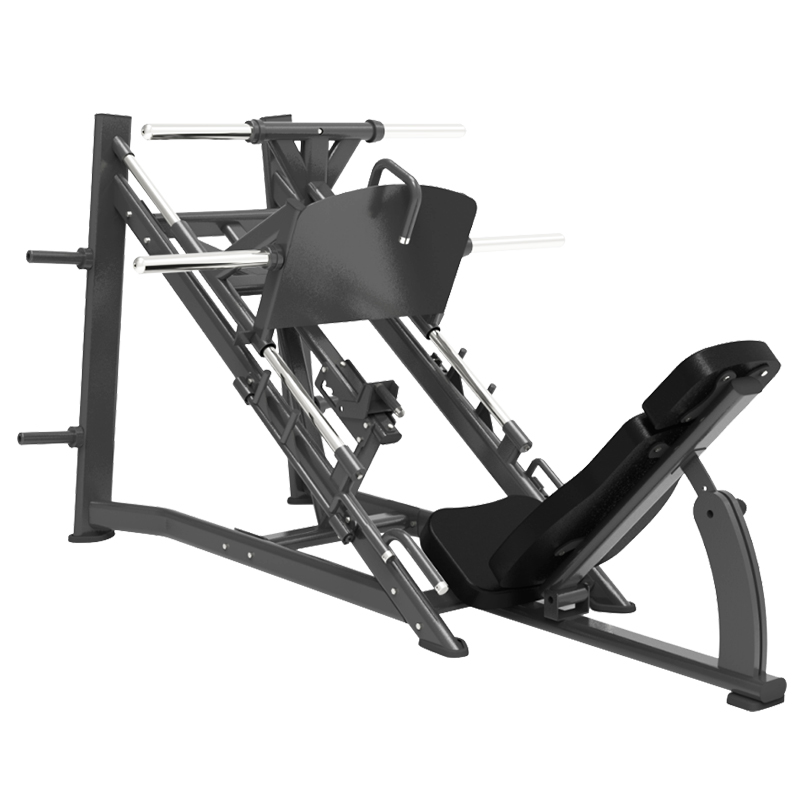
One of the biggest divides between the two is stability. The hack squat machine locks your body into a fixed path, supporting your lower back and guiding your movement. This makes it ideal for beginners or anyone recovering from injuries (like lower back strains). You’ll be less likely to mess up your form (e.g., rounding your back or knee valgus) because the machine controls the range of motion.
Free squats, by contrast, require you to stabilize your entire body—core, back, and legs—on your own. This builds functional strength (great for real-life movements like lifting groceries) but raises the risk of injury if your form is off. If you’re new to squats, the hack machine can help you master proper technique before moving to free weights.
2. Muscle Activation: Which Targets Glutes & Legs More?
Both exercises work your quads, glutes, hamstrings, and core—but the hack squat often emphasizes quads more due to its fixed angle (your torso stays more upright, reducing hamstring involvement). If you want to bulk up your front thighs, the machine is a solid choice.
Free squats, especially with a barbell, engage your posterior chain (glutes, hamstrings, lower back) more because you need to hinge at the hips to keep the bar balanced. This makes them better for overall lower-body development and improving athletic performance (think running, jumping, or sports).
Pro tip: For well-rounded legs, mix both into your routine—use the hack machine for quad focus and free squats for glute and functional strength.
3. Weight Capacity & Progression: How Much Can You Lift?
Hack squat machines typically have a higher weight capacity (some go up to 500+ lbs) and let you add weight quickly (no need to load plates onto a bar). This is perfect for lifters who want to push heavy weights without a spotter—most machines have safety stops to prevent the weight from crashing down.
Free squats rely on your ability to balance the bar, so progression can be slower at first. You’ll also need a spotter when lifting heavy to avoid injury (e.g., dropping the bar on your back). That said, free squats offer more flexibility—you can adjust your stance (wide for glutes, narrow for quads) or add accessories (resistance bands, chains) to challenge yourself in new ways.
4. Convenience & Accessibility: What Fits Your Gym Routine?
Hack squat machines are bulky and not always available at small gyms or home setups. They also require a few minutes to adjust the seat height, foot position, and weight—minor, but worth noting if you’re short on time.
Free squats, on the other hand, are accessible anywhere: all you need is a barbell (or just your bodyweight) and a flat surface. They’re faster to set up, making them great for busy gym sessions or home workouts. If you travel often, free squats are easier to incorporate into your routine than hunting for a hack machine.
Final Verdict: Which Should You Choose?
Pick the hack squat machine if: You’re a beginner, recovering from injury, want to focus on quads, or lift heavy without a spotter.
Pick free squats if: You want to build functional strength, target your glutes/hamstrings, train at home, or improve athletic performance.
Remember, there’s no "one-size-fits-all" answer. The best approach is to experiment with both and see which feels more comfortable and aligns with your goals. Whether you’re crushing reps on the hack machine or perfecting your barbell squat form, consistency is key to seeing results!