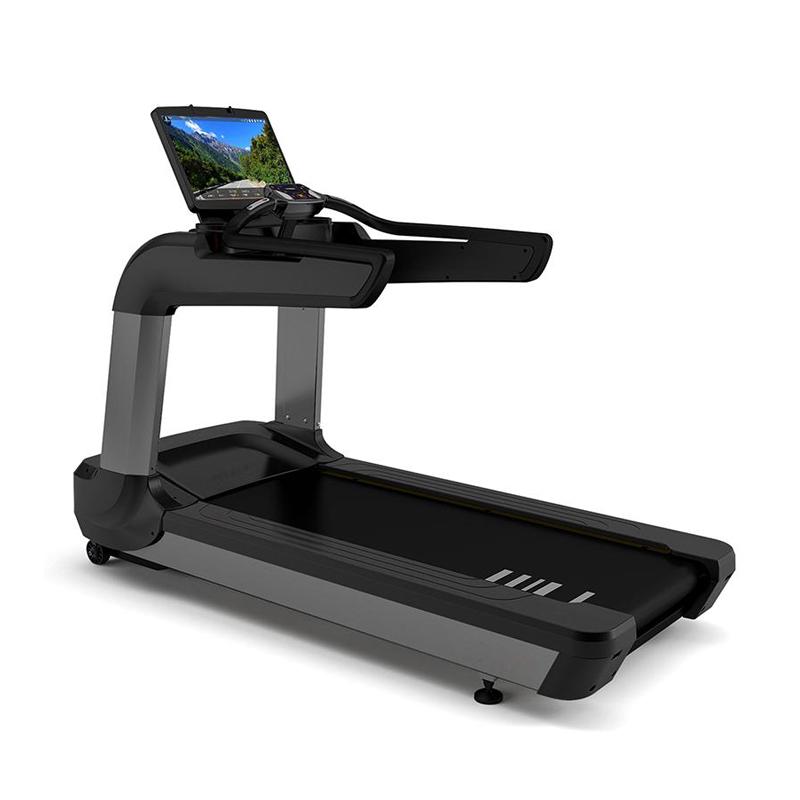
In today’s fitness-focused world, treadmills have evolved from simple running machines to sophisticated health tracking devices. Most modern treadmills come equipped with sensors that monitor heart rate and calculate calorie burn, providing users with real-time data to guide their workouts. But how reliable is this information? Let’s explore the accuracy of these key metrics and what factors influence their precision.

Heart rate monitoring on treadmills typically uses two methods: chest straps and hand grip sensors. Chest strap monitors, which use electrical impulses to detect heartbeats, are generally considered more accurate, with a margin of error around 1-2 beats per minute. They directly measure cardiac activity and are less affected by movement or sweat. In contrast, hand grip sensors rely on optical or electrical detection but often struggle with accuracy. Factors like dry skin, improper hand placement, or rapid arm movement during running can cause readings to fluctuate by 5-10 beats per minute or more. Many users find grip sensors inconvenient during intense workouts, leading to inconsistent data collection.
When it comes to calorie burn calculations, treadmills face greater challenges. These estimates are based on algorithms that use variables such as weight, age, gender, speed, and incline. However, the human body’s energy expenditure is highly individual, influenced by factors like muscle mass, fitness level, metabolism, and even hydration status. Most treadmills assume an average metabolic rate, which means their calorie counts can be off by 10-30% for individual users. For example, a person with more muscle mass burns more calories at the same speed than someone with less muscle, but the treadmill’s algorithm may not account for this difference. Additionally, incline settings and user form—such as leaning on the handrails—can skew results, as the machine may overestimate effort when users reduce their workload.
Several studies have tested treadmill accuracy against medical-grade equipment. A 2023 study published in the Journal of Sports Science found that while treadmills provided reasonable estimates for steady-state cardio, they often overestimated calorie burn during high-intensity interval training (HIIT) by up to 25%. This discrepancy arises because HIIT involves rapid changes in effort that algorithms struggle to track in real time.
So, how can users get more reliable data from their treadmills? First, invest in a high-quality chest strap heart rate monitor that syncs with the treadmill. This eliminates the inaccuracies of hand grip sensors. Second, input accurate personal data—including weight, height, and age—into the treadmill’s settings, as incorrect information skews calorie calculations. Third, avoid leaning on the handrails, as this reduces actual effort and leads to overestimated calorie burn. Finally, use treadmill data as a general guide rather than an exact measurement. Track trends over time instead of fixating on single-workout numbers.
In conclusion, treadmill heart rate and calorie burn data offer valuable insights for workout planning but are not 100% accurate. Heart rate monitors, especially chest straps, provide reasonably reliable results, while calorie estimates should be taken with caution. By understanding the limitations of these metrics and taking steps to improve accuracy, users can make more informed decisions about their fitness journeys. Remember, consistency in exercise matters more than the precision of every data point.