When it comes to building upper body strength and muscle mass, two exercises that often take center stage are the bench press and push - ups. While both target the chest, shoulders, and triceps, they have distinct characteristics that make them suitable for different fitness goals and individuals. In this article, we'll explore the key differences between these two popular exercises.

Equipment and Setup
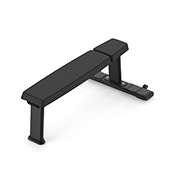
The most obvious difference lies in the equipment required. The bench press demands a bench, a barbell or dumbbells. You need to set up the weights, adjust the bench to an appropriate height, and ensure proper safety measures. This setup can be time - consuming and requires access to a well - equipped gym.
On the other hand, push - ups are the epitome of simplicity. All you need is a flat surface, like your living room floor or a gym mat. There's no need to worry about loading weights or adjusting equipment. This makes push - ups extremely convenient for home workouts or when you're on the go.
Resistance and Progression
In the bench press, you have a wide range of resistance options. You can start with a light barbell or small dumbbells and gradually increase the weight as you get stronger. This allows for a more precise and rapid progression in strength training. For example, a seasoned lifter might add 5 - 10 pounds to the barbell each month as they continue to build muscle.
Push - ups, however, rely mainly on body weight. While you can make them more challenging by doing variations such as decline push - ups, diamond push - ups, or adding extra reps, the resistance increase is more incremental. To significantly increase the difficulty of push - ups, you might need to reach an advanced fitness level where you can perform one - arm push - ups, which takes a long time to master.

Muscle Activation
Both exercises work the chest, shoulders, and triceps, but the degree of muscle activation varies. During a bench press, the chest muscles, especially the pectoralis major, are the primary movers. The shoulders and triceps assist, but the focus is on the chest. Research has shown that the bench press can generate higher muscle activation in the chest compared to push - ups.
Push - ups, on the other hand, engage a broader range of muscles. In addition to the chest, shoulders, and triceps, push - ups also work the muscles in your core, including the rectus abdominis and obliques, as they help maintain body stability throughout the movement. Your back muscles, specifically the rhomboids and trapezius, also get a minor workout as they help keep your shoulders in place.
Stability and Balance
The bench press provides a relatively stable platform. The bench supports your body, allowing you to focus mainly on moving the weights vertically. This stability is beneficial for isolating the chest and other target muscles. However, it may not do as much for improving overall body stability.
Push - ups, in contrast, require you to maintain balance and stability throughout the entire movement. Since your body is unsupported except for your hands and feet, your core and stabilizing muscles have to work hard to keep your body in a straight line. This makes push - ups a great exercise for enhancing functional strength, which is useful in daily activities such as lifting objects or getting up from a chair.
In conclusion, both the bench press and push - ups are excellent exercises for upper body strength. The bench press is ideal for those looking to build maximum chest strength and muscle mass with precise resistance control, while push - ups are great for overall body strength, stability, and convenience. Incorporating both into your fitness routine can provide a well - rounded upper body workout.