Functional strength training, popular in fitness but initially puzzling, is defined by the American Council on Exercise (ACE) as training against resistance to boost real - life movement performance, simplifying daily tasks like lifting groceries. The American College of Sports Medicine (ACSM) sees it as a strength training form enhancing balance, coordination, etc.
At its heart, it focuses on multi - joint and compound movements. These engage multiple muscle groups, mirroring natural, complex daily or sports movements. For example, squats involve the quadriceps, hamstrings, glutes, and core for stability, like when picking up an object. Kettlebell swings incorporate hips, glutes, back, and shoulders, similar to real - life throwing motions.

The Core Elements Setting It Apart
Multi - everything Movements: It emphasizes multi - joint, multi - muscle - group, and multi - dimensional movements. Traditional strength training, like bicep curls, isolates single muscle groups, while functional strength training, such as lunges, engages multiple muscle groups in the lower body and the core for balance.
Multi - planar Motion: It uses movements in multiple planes. Traditional training often focuses on the sagittal plane, while functional training includes frontal (side - to - side) and transverse (rotational) planes, better reflecting real - life and sports activities.
Smaller Muscle Activation: It activates smaller and deeper muscle groups like the transversus abdominis. Traditional training may not stimulate these enough, but functional training exercises like single - leg squats on an unstable surface do.

Unveiling the Myriad Benefits
Power Output: It can enhance power output. Research shows that by engaging multiple muscle groups and improving neuromuscular coordination, it increases movement power. Athletes incorporating it saw a boost in power - based performance.
Injury Prevention: Strengthening overlooked muscle groups improves joint stability and balance, reducing fall and injury risks. Elderly people in functional strength training had a 30% lower fall risk.
Movement Efficiency: It improves overall movement efficiency, making daily tasks and sports performance easier. Lifting, getting up, or climbing stairs become less strenuous.

Embarking on Your Training Journey
Common functional strength training exercises include squats, deadlifts, lunges, and kettlebell swings. Beginners should start with bodyweight exercises, 2 - 3 sets of 10 - 12 reps, 2 - 3 times a week. As you progress, increase weight, reps, or sets. Advanced individuals can do 3 - 5 sets of 8 - 10 reps with heavier loads and add variations. Consistency and proper form are crucial.
Equip Yourself for Success
For functional strength training, high - quality fitness equipment from our fitness equipment can help.
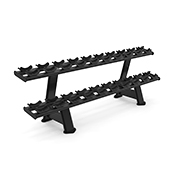
Dumbbells: Versatile for many functional exercises, with a non - slip surface for safety.
Barbells: Great for compound movements, made of high - grade steel with balanced weight distribution.
Resistance Bands: Ideal for small spaces or portability, providing variable resistance for various exercises.
Investing in this equipment is investing in your fitness journey, enabling you to take functional strength training to the next level.